
When Mayer Mizrachi, Mayor of Panama City, stepped onto the stage at the 2025 Bitcoin Conference in Las Vegas on May 16, 2025, he didn’t just talk about crypto—he laid out a blueprint for how a city can outmaneuver a nation. "Bitcoin is not just safe. It’s prosperous," he declared, sparking murmurs across the crowd. What followed wasn’t just ambition. It was a calculated play: Panama City could become the next Bitcoin hub—not by forcing adoption like El Salvador, but by quietly building infrastructure that makes crypto irresistible.
From Parking Tickets to Panama Canal: Crypto in Daily Life
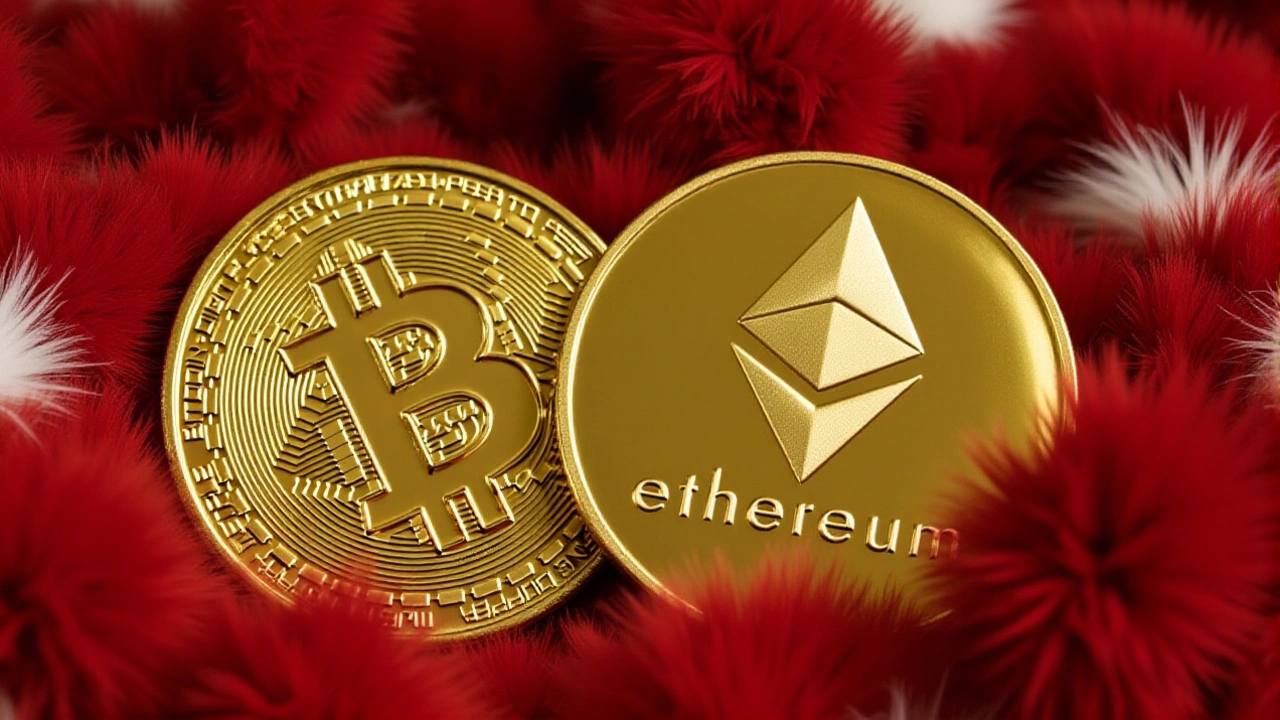
It’s easy to dismiss crypto as speculative noise, but in Panama City, it’s already paying for parking. Since late 2024, residents and businesses have been able to settle municipal bills—taxes, permits, fines, even street parking fees—using Bitcoin, Ether, USDC, and Tether. The twist? The city never holds the crypto. A local bank, unnamed but described as "one of the biggest," instantly converts every digital payment into U.S. dollars, sidestepping volatility while keeping the transaction seamless. It’s a quiet revolution: no Chivo wallet drama, no mandatory merchant rules. Just efficiency.
"We accept Bitcoin," Mizrachi said plainly during the panel "Is Panama Next?"—a line that carried more weight than it sounded. He didn’t need to shout. The data spoke for itself: Panama has been dollarized since 2000, its banking system stable, its tax code lean. In 2024 alone, over 3,200 crypto-related businesses registered in the country, according to Panama’s Financial Intelligence Unit. Real estate agents in Casco Viejo and Bocas del Toro now list condos with Bitcoin price tags. Smart contracts handle escrow. It’s not just tolerated—it’s becoming normal.
A Bitcoin Reserve? And Canal Payments?
But Mizrachi didn’t stop there. In a move that stunned even seasoned crypto observers, he floated the idea of Panama City establishing its own Bitcoin reserve—independent of national policy. Think of it as a city treasury holding a strategic stash of BTC, not for speculation, but for liquidity, resilience, and leverage. The goal? To weather global financial shocks without relying solely on the U.S. dollar. "We’re not waiting for Congress," he told reporters after the panel. "Cities are where innovation happens. Why should the national government have a monopoly on boldness?"
Even more audacious: he proposed allowing ships transiting the Panama Canal to pay tolls in Bitcoin. The canal handles nearly 10,000 vessels annually—roughly 5% of global maritime trade. Right now, payments are in U.S. dollars, processed through layers of banks and intermediaries. Imagine a ship captain paying tolls in BTC, getting instant confirmation, and skipping the 72-hour clearance queue. Faster passage. Lower fees. A competitive edge. Mizrachi claims the technology exists. All it needs is political will.
El Salvador’s Lessons—And Its Retreat
Mizrachi didn’t come to Las Vegas empty-handed. He met privately with Max Keiser and Stacy Herbert, key advisors to El Salvador’s President Nayib Bukele. He knows their playbook—and their missteps. El Salvador made Bitcoin legal tender on September 7, 2021, a historic first. But by December 2024, after securing a $1.4 billion IMF loan, it rolled back key elements: mandatory merchant acceptance was scrapped, tax payments in BTC were discontinued, and the Chivo wallet was phased out. A revised Bitcoin law passed in February 2025 softened the mandate.
Yet here’s the irony: even as El Salvador scaled back, it kept buying. By March 2025, its Strategic Bitcoin Reserve Fund had grown to 6,102 coins, worth roughly $500 million. That’s not a retreat—it’s a pivot. Mizrachi sees it clearly. "They didn’t fail. They adapted," he said. "We won’t make the same mistakes. We won’t force anything. We’ll make it so good, people choose it."
A New Financial Capital of Latin America
The timing couldn’t be better. Panama’s Panama Blockchain Week 2025, held April 22–24 at the Panama Convention Center, drew over 8,000 attendees—developers, investors, regulators, and digital nomads. The country’s appeal? A dollarized economy, low taxes, no capital gains tax on crypto, and access to both the Caribbean and Pacific. It’s why thousands of remote workers and crypto founders now live here—not because they’re fleeing regulation, but because Panama offers freedom without chaos.
Mizrachi’s message to lawmakers is simple: don’t regulate. Don’t restrict. Don’t overthink. "If you want to be the Financial Capital of Latam," he said, "you don’t build walls. You build bridges." Panama’s central bank hasn’t yet endorsed his reserve proposal. But local banks are already testing settlement protocols. The National Assembly is quietly drafting a virtual asset services law—looser than Europe’s MiCA, tighter than some U.S. states. It’s a balancing act.

What’s Next?
By the end of 2025, Mizrachi aims to launch a pilot Bitcoin reserve—starting with $10 million in BTC, funded by municipal surplus and private donations. He’s also in talks with the Panama Canal Authority to test a crypto toll payment system on a single cargo line by Q1 2026. If it works, it could ripple across global shipping. Meanwhile, the city’s digital wallet app, already used by 12% of residents for municipal payments, will soon integrate staking and yield options—again, without the city touching the assets.
There’s risk, of course. Bitcoin’s volatility could spook traditional investors. Regulatory uncertainty lingers. But Mizrachi’s approach isn’t about betting on price. It’s about betting on utility. And in a world where central banks are racing to digitize currencies, Panama City might be the first to prove that decentralized money can work—not by decree, but by design.
Frequently Asked Questions
How does Panama City’s Bitcoin payment system differ from El Salvador’s?
Unlike El Salvador’s mandatory legal tender model, Panama City uses a bank-mediated conversion system: all crypto payments are instantly turned into U.S. dollars, avoiding volatility and regulatory friction. No merchant is forced to accept Bitcoin, and citizens aren’t required to use it. It’s opt-in, not imposed—making adoption smoother and less politically contentious.
Why would ships pay tolls in Bitcoin for the Panama Canal?
A Bitcoin payment system could cut processing times from days to minutes, reducing delays for cargo ships. With nearly 10,000 vessels passing annually, even a 12-hour savings per ship translates to $200 million in annual efficiency gains. Plus, it positions the canal as a tech-forward alternative to the Suez Canal, attracting forward-thinking shipping firms.
Is Panama’s government supporting Mizrachi’s Bitcoin reserve plan?
Not officially. The national government has not endorsed the proposal, and Panama’s central bank remains cautious. But Mizrachi is acting at the municipal level, where he has authority over city finances. If successful, the reserve could become a model for national adoption—similar to how Miami’s crypto-friendly policies pressured Florida’s state legislature.
What impact could this have on Latin America’s financial landscape?
If Panama City succeeds, it could trigger a wave of city-led crypto adoption across Latin America—especially in countries with unstable currencies like Argentina and Venezuela. Cities like Bogotá, Lima, and Santiago may follow with their own pilot programs, bypassing slow national bureaucracies. Panama could become the region’s de facto crypto gateway, drawing investment and talent away from Miami and Singapore.
How is Panama avoiding the pitfalls El Salvador faced?
Panama avoids IMF pressure by not making Bitcoin legal tender, not requiring merchant acceptance, and not using state funds to buy BTC directly. Instead, it lets market forces drive adoption. The city’s bank partnerships ensure compliance with AML/KYC rules. This approach sidesteps the political backlash and financial instability that forced El Salvador to backtrack in 2024.
What’s the timeline for Panama City’s Bitcoin reserve?
Mizrachi aims to launch a pilot reserve by Q4 2025, starting with $10 million in Bitcoin funded by city surplus and private donations. A full-scale reserve, potentially holding up to $50 million, could follow by 2027 if the pilot proves stable and widely adopted. The city has already secured legal opinions confirming municipal authority to hold digital assets as reserves.